How to release a song on Spotify, the short version
You can't upload a song straight to Spotify. To release a song on Spotify you go through a distributor, a company that delivers your music to Spotify and the other streaming services, then leave three to four weeks between the final master and release day so there's time to pitch it to Spotify's editors. Getting the song live is the easy part. The plan around release day is what gives it a chance of being heard.
Can you upload a song to Spotify directly?
No. Spotify doesn't take uploads from artists, so the route is a distributor, which delivers your audio, artwork and track details to Spotify (and usually to the other streaming services at the same time).
How to release a song on Spotify, step by step
1. Finish your master and cover art
Finish everything before you upload, meaning the final master, signed off by everyone involved, and cover art that meets your distributor's file specification.
2. Choose a distributor
Distributors charge in different ways and change their terms, so compare the current options on their own sites. Think about the next year rather than the next song. Most practitioners recommend releasing every four to eight weeks while you're growing an audience, so terms that suit frequent releases are worth having. When you sign up, enter your artist name exactly as it appears on any earlier releases.
3. Upload and fill in the metadata
Metadata is the information that travels with your song, including the title, artist name, featured artists, credits, genre and release date. What you submit is what shows up, spelling mistakes included, so write every credit out in a document, have each collaborator check their own name, then copy them into the upload form.
4. Set your release date three to four weeks ahead
Three to four weeks from final master to release day is the common recommendation, mainly so the song can be uploaded and pitched to Spotify's editors in time. Press and radio need longer, and the timeline further down shows how far back to start.
5. Claim Spotify for Artists
This is where the editorial pitch tool lives, along with your listening data and profile settings. Update the bio, images, artist pick and social links while you're there. Nobody has shown that this changes how Spotify recommends your music, but it gives a curious new listener a reason to stay.
6. Pitch the song to Spotify's editorial playlists
You can pitch one unreleased song from each release to Spotify's editors. Submit at least seven days before release day, which also gets the song into your followers' Release Radar. Spotify has said every artist uses the same pitch tool and the pitches are read, but far more artists pitch than can be placed, so nobody can guarantee an editorial placement (us included). Our guide on how to get on Spotify editorial playlists covers writing the pitch.
7. Decide on a pre-save
It's worth setting one up, though probably not for the reason you'd expect. The pre-save section below explains why, and how.
8. Release day, then keep promoting
Check the song is live on the right profile with the right artwork and credits, ideally by searching for it from a friend's account, and change your artist pick to the new release. Tell the people who already listen first (your mailing list and the fans who message you), then switch on the promotion you planned.
How far ahead should you plan a release on Spotify?
For a single, the weeks usually fall something like this.
| When | What happens |
|---|---|
| 6 to 8 weeks before | If you're running press, brief your publicist and prepare your music press release, photos and story. |
| 4 to 6 weeks before | Arrange radio plugging for your release if radio is in the plan, especially if national stations are the target. |
| 3 to 4 weeks before | Final master and artwork ready and uploaded. Claim Spotify for Artists, set up the pre-save, and plan playlisting and ads, which need two to four weeks of lead time. |
| At least 7 days before | Editorial pitch submitted. Pre-save link shared with your fans. |
| Release day | Check the live track, update your profile, tell your fans first and switch on the promotion. |
| The weeks after | Keep promoting, and watch saves, repeat listening and adds to people's own playlists more closely than the headline stream count. |
Why plan so tightly around release day? Spotify's new-release surfaces, Release Radar among them, are open for a short window after a song comes out, so promotion timed close to release gets the most help from them.
You'll often hear that every new release gets a big automatic push. Our research found the early push varies enormously from song to song, even between two songs by the same artist released on the same day. Spotify picks its own winners, one song at a time.
It isn't a 48-hour deadline either. Spotify describes its recommendations as building gradually from how listeners behave, and our research across around 1,000 tracks found recommendation reach typically fades over about three weeks. That's why steady promotion through the first month tends to do more than one big burst.
Spotify pre-save campaigns explained
A Spotify pre-save is a link you share before release. A fan clicks it, logs in with Spotify, and the song lands in their library when it comes out.
Does a pre-save help the algorithm?
Honestly, it's debated. Labels often love pre-saves, and you'll read plenty of claims that they feed Release Radar and the algorithm, but treating the pre-save count as a forecast of how a release will do can mislead you.
Saves themselves do matter once a song is out. Across more than 500 tracks, our research found saves led algorithmic pickup by around three days, with listening from people's own libraries following after that. We don't have a finding on pre-saves specifically, so watch whether listeners save and return once the song is live.
What a pre-save is actually good for
Contact details.
Many pre-save tools let you collect an email address or phone number at sign-up, and email, SMS or a broadcast channel is the only audience an artist really controls. Next release, you can reach those people without waiting for a platform to show them your song.
How to set one up and share it
- Check whether your distributor offers a pre-save link, and if not, create one with a smart-link tool.
- Turn on email or phone capture if the tool offers it, then test the link yourself.
- Share it where people who already know you will look (your bio link, stories and mailing list) and post it more than once, because a single post is easy to miss.
How to promote your song after it's live
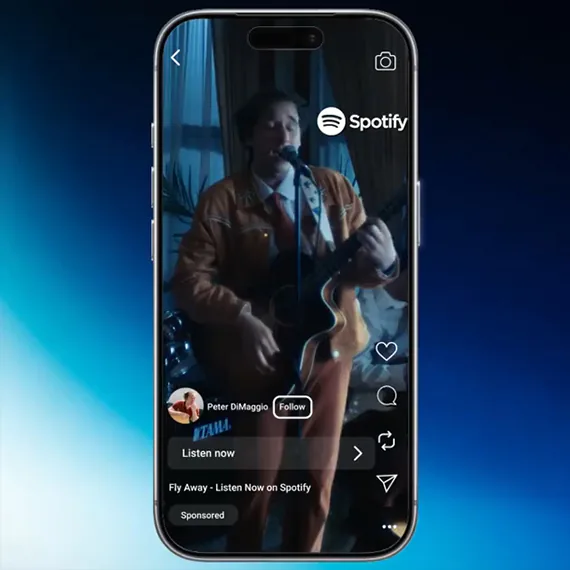
Spotify itself says an artist's first listeners usually come from outside Spotify, through social platforms, live shows and word of mouth. Short-form video does a lot of that work, and many artists find performance clips with on-screen text do well, because the text gives a stranger context the song alone can't.
What each service does
A campaign uses services with different jobs, and they work best together.
- Playlisting puts the song in front of new listeners in the right scene, at a volume you won't reach on your own. Our research found placements produce saves at a steady rate, about one for every 170 to 200 playlist streams, and across 32 campaigns more than half of the daily uplift was still arriving a month after the campaign ended. That's the job of targeted Spotify playlist pitching.
- Conversion ads on Instagram and Facebook convert listening into saves and repeat listening from people's own libraries, which carries on after the spend stops. Our research found each save is followed by about five library streams over 90 days. See our Meta and Instagram ads.
- An artist-owned playlist gives you an audience you keep, which suits an EP or a catalogue. Our playlist growth service grows one for you, and it stays yours after the campaign.
- Press is for credibility rather than stream counts, giving fans, curators, bookers and labels coverage to find when they search your name. That's what music PR for independent artists is for.
Ads and playlisting work best as one campaign timed close to release. The order doesn't need staging for Spotify's sake, though running both at once makes it harder to tell which did what.
Timing and your catalogue
Spotify has said pure play count barely counts, and that listeners who skip, play once and never save can actively work against a song, so the right audience matters more than the biggest one. Our research also found that playlisting a song that's already declining after its launch doesn't arrest the decline, so time playlisting to meet the release.
Older songs are still worth promoting, though. Songs regularly find their audience months after they come out, and our playlisting work covers catalogue tracks as well as new ones. Introducing an older song to people who've never heard it is a different job from rescuing a launch that's fading.
How much does it cost to release a song on Spotify?
Money goes to two places when you release a song, distribution and whatever promotion you choose. Distribution depends on the distributor you pick and how it charges (see step 2). Promotion depends on your goals, your release schedule and your budget, and there's no single right amount.
Common mistakes when releasing music on Spotify
- Uploading with no lead time. You miss editorial pitching and Release Radar timing.
- Sloppy metadata or artwork. Misspelt titles and missing credits go live exactly as submitted.
- Going quiet for months. Gaps of three to six months tend to lose an audience's attention, and bulk uploading isn't the fix, since Spotify says it filters mass uploading out of programming.
- Paying anyone who guarantees streams or placements. Artificial streams can get songs and whole catalogues removed, and anyone reading the data can see them.
How Decent helps your release get heard
Distribution gets your song onto Spotify. We work on what happens next, getting it in front of people who'll come back to it, and we don't promise placements or algorithmic results, because nobody honestly can.
Our Spotify playlisting uses vetted, genre-matched independent curators, with no fake playlists and no bots, and it's performance-backed, working toward agreed targets. Every campaign comes with weekly reporting, and we check every one for signs of artificial streams.
Growing a fanbase is a long-term game, so we'd rather plan across your next few releases than treat each one as a one-off. If you've got a release coming up, submit your music and tell us the date. The earlier we hear about it, the more options there are.